Family courts are changing

The Family Court Is Changing — But What Does This Mean for Parents?

Posted Posted in Uncategorised

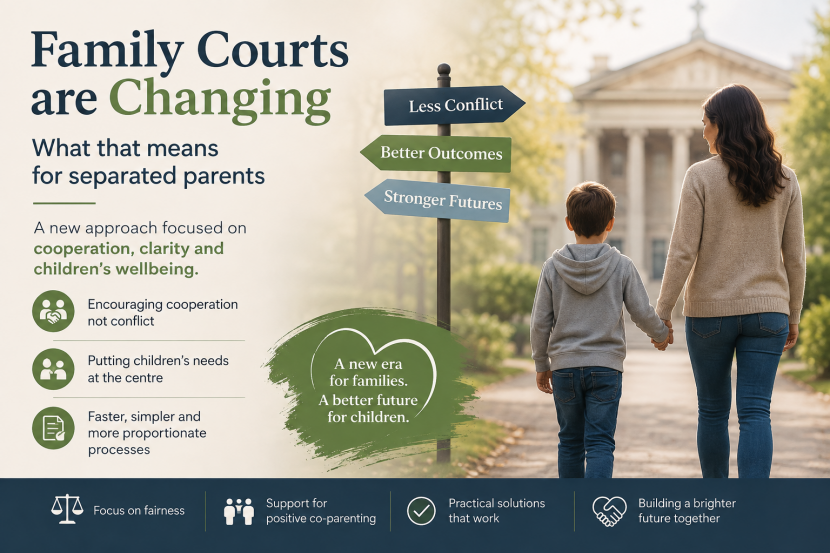
Something important is happening in family justice  and it could change the way separating families resolve disputes.

The Government is rolling out a new Child Focused Courts approach across England and Wales, following pilot schemes designed to reduce delays and keep children at the centre of family proceedings.

So what does all of this mean for parents?

The message is clear: court should not automatically be the first option

When a relationship breaks down, emotions can be overwhelming.

You may feel angry.

You may feel betrayed.

You may believe that your former partner is completely unreasonable.

And you may feel that the only way to protect yourself, or your children, is to go to court.

But there is an important question to ask before doing so:

“Is court really the best way to resolve this?”

When relationships break down, emotions can be overwhelming.

There may be anger, hurt, betrayal and a genuine belief that your former partner is being completely unreasonable.

It can quickly become:

“What I want.” versus “What you want.”

And before long, the children can become caught in the middle.

What if we changed the question?

Instead of asking:

“Who is right?” what if parents asked “What do our children need from both of us now?”

That is one of the reasons I believe mediation has such an important role to play.

Mediation provides a structured environment where parents can have difficult conversations, understand what is important to each other and explore practical solutions, without handing every decision over to a judge.

It doesn’t mean agreeing with your former partner.

It doesn’t mean giving up your rights.

And it certainly doesn’t mean pretending that the relationship breakdown didn’t happen.

It means trying to find a way forward.

Mediation can sometimes help people resolve matters before proceedings begin and, importantly, even after court proceedings have started.

After decades working as a family lawyer and mediator, I know that separating couples need someone to help them have the conversation that they have been unable to have themselves.

So before you go to court, ask yourself:

“Have we genuinely explored whether we can resolve this ourselves?”

And if you are already in court, don’t automatically assume that mediation is no longer an option.

The goal isn’t to win the separation.

The goal is to find a way forward and protect your children from the consequences of the conflict wherever possible.

If you are considering separation, struggling to agree arrangements for your children or facing financial issues, Mediation Line can help you explore whether mediation is right for you.


Mala Mandalia

FMCA Accredited Mediator

Mediation Line

www.mediationline.co.uk

Email:info@mediationline.co.uk

Tel: 07834 161960

 

Save thousands

How We Helped Save Thousands in Mediation

Posted Posted in Uncategorised

We saved thousands for our clients SS who came to us, they were juggling properties and pensions, unsure how to reach a fair, cost-effective solution. Through expert mediation with a mediator that has three decades of experience and strategic planning, we helped SS:

  1. Save thousands of pounds
  2. Reach a clear, cost-effective agreement with confidence and clarity

The result? A solution that protected their assets, reduced stress, and delivered real financial impact—all without unnecessary legal costs.

This is what we do: turning negotiations into smart agreements in mediation. If you’re facing financial issues when separating mediation plus the right strategy could save you time, money, and worry—just like SS.

Want help today with your financial arrangements,  book a Mediation Information MIAM meeting. or  call us today on 07834 161960.

Best wishes,

Mala Mandalia
FMCA Accredited Mediator
Mediation Line

www.mediationline.co.uk
Email: info@mediationline.co.uk

Hurry - Mediation Voucher

Hurry Get Free Mediation

Posted Posted in Uncategorised

Thanks to the Family Mediation Voucher Scheme, funded by the UK Government, eligible families can receive up to £500 towards the cost of mediation — a real help when budgets are tight. The scheme runs to March 2026, ensuring more families can access this supportive process without lengthy legal costs.

This isn’t just good news — it’s proof that mediation works: evidence shows that a large proportion of families supported by the scheme reach full or partial agreements without going to court.

At the moment we do not know if the scheme will continue after March 2026 so hurry to get free mediation and don’t lose out. Receive FREE MEDIATION before the scheme may end.

Book your MEDIATION INFORMATION ASSESSMENT MEETING  or call 07834 161960.

Hurray, time is running out.

 Call us today on 07834 161960.

Best wishes,

Mala Mandalia
FMCA Accredited Mediator
Mediation Line

www.mediationline.co.uk
Email: info@mediationline.co.uk

Family Mediation Matters

Why Family Mediation Matters

Posted Posted in Uncategorised

Are you separating or going through a divorce, or do you have disagreements over arrangements for children or finances. Here’s the good news? You don’t have to face it alone and spend loads of money. There’s a path that’s kinder, calmer, and more cost‑effective than court: Family Mediation.

Why Family Mediation Matters and is different from Court

Less Stressful — No courtroom drama, no judge deciding your future.
You’re in Control — Mediation helps you shape your agreements together.
Better for Children — It’s confidential, cooperative, and prioritises well‑being.
Cost‑Effective — Vouchers plus fewer legal fees mean more money stays with your family.

Instead of competing in court, mediation helps families talk, listen and agree — even when emotions run high.

FREE MEDIATION Making Mediation More Accessible

Thanks to the Family Mediation Voucher Scheme, funded by the UK Government, eligible families can receive up to £500 towards the cost of mediation — a real help when budgets are tight. The scheme has been extended through March 2026, ensuring more families can access this supportive process without lengthy legal costs.

This isn’t just good news, it’s proof that mediation works: evidence shows that a large proportion of families supported by the scheme reach full or partial agreements without going to court.

Real Impact, Real Results

Over tens of thousands of families have already used mediation vouchers and found solutions that protect their loved ones and reduce conflict. Many families report:

  • Faster resolution than litigation
  • Agreements they genuinely understand and accept
  • A calmer environment for co‑parenting
  • Less costs.

It’s not just cheaper, it can bring peace of mind.

Want to find out more?

Family Mediation Week is coming: 26–30 January 2026 
Each year the Family Mediation Council (FMC) hosts a special awareness week packed with free events, webinars and support designed to help families understand mediation, ask questions, and connect with expert mediators. This year’s schedule includes practical workshops on topics like supporting children, managing conflict and inclusive practice.

Whether you’re just curious or ready to take a positive step forward, these open sessions are for you — no judgement, just support.

Ready to Take the Next Step?

If you’re navigating a separation or considering how best to sort out parental responsibilities, finances, or living arrangements, now is an ideal time to explore mediation.

Join Family Mediation Week events

See if you qualify for mediation vouchers and Book your Mediation Information and Assessment Meeting (MIAM)

Have questions or want help getting started? Contact us today

If you need help with your divorce or children arrangements, call us today on 07834 161960.

Best wishes,

Mala Mandalia
FMCA Accredited Mediator
Mediation Line

www.mediationline.co.uk
Email: info@mediationline.co.uk

Top 5 tips for choosing the best family mediator for you

Posted Posted in Uncategorised

Family Mediation offers a quick and cost-effective way to resolve disputes when you are separating. One of the fundamental components of a mediation is, of course, having a good mediator.

The mediator you choose will play a critical role in how well your separation goes from both a financial and emotional standpoint.

So instead of simply asking, “How do I find a mediator near me?” Seek out the best mediator to help you. Because doing so will make all the difference in how peaceful and cost-effective your separation will be. And how fair, thorough and child-focused your agreement will be.

Most mediators are committed to doing a good job and genuinely want to help people resolve their disputes. Not all mediators are the same! Each has a different combination of personality, styles, experience, knowledge, skills and other competencies. In the right combination, those attributes can greatly maximise the chances of successfully resolving a dispute.

Choosing a good mediator is absolutely crucial to getting the most out of your mediation.

good mediator

Follow these top tips to find the one that is right for you:

1. What qualifications does your mediator have?

Is your mediator accredited by the Family Mediation Council. You can check this by looking at the Family Mediation Council website ‘Find a Mediator’ database https://www.familymediationcouncil.org.uk/find-local-mediator/

Only accredited mediators can sign court forms for you.

At Mediation Line, you can be assured that you will be dealing with a fully trained and accredited family mediator regulated by the Family Mediator Council.

2. What Level of Experience does your mediator have?

Considerations here are:

How many cases has your mediator successfully mediated?

Is it important to you that your mediator is a lawyer or non-lawyer?

Some people feel more comfortable working with a lawyer mediator because they believe they will have a clearer idea of the law. On the other hand, some mediators have other backgrounds that can also be helpful, for example they might come from a therapeutic background and they focus more on the communication aspect of mediation.

At Mediation Line, our accredited mediator is a Lawyer Mediator, who will inform you on how the law applies to your particular facts and circumstances. Then, you would learn what would be the most likely result if you each hired your own divorce lawyer and went to court.

3. Is your mediator a “Good Fit”?

good mediator

It’s important that you feel comfortable with your mediator. It is important to remember that you will need to be able to trust the mediator with a great deal of confidential information.

You also want to feel comfortable that the mediator will manage the process effectively and remain impartial in their dealings with you.

You want a neutral partner (not just a third-party) who ensures that all rights and interests of both of you are being protected and who is looking out for each of your best interests, as well as the entire family.

Just trust your gut here. It’s imperative that both of you have some type of chemistry or rapport with the mediator upon that first meeting or phone call.

4. A good mediator has a good network of contacts to help you.

good mediator

When emotions prevent positive forward progress, a savvy mediator will encourage clients to work with a therapist, or divorce coach, to move past sticking points. Just as important, additional divorce support should be available, such as healthy parenting plans and guidance on how to speak to your children about divorce. Referrals to a financial planner for higher net worth cases, or even a referral to an estate agent who will help you get the best price if you must sell your house.

At Mediation Line we offer you a network of connections to specially selected experts should you require this.

5. Does your mediator offer mediation that is easy and affordable for you?

When comparing mediators, be wary of hidden extra charges. Check what is included in the mediation fee. Ask if it includes preparation time for meetings and for writing up any agreement. These “extras” should be included in the overall fee but, if not, they can significantly add to the cost of mediation.

At Mediation Line there are no “extras”; our mediation fees set out what you pay, and that’s all you pay.

The first step to choosing a good mediator is to arrange an one to one individual meeting with the mediator. This will give you a clear idea of whether you have chosen someone right for you.

At Mediation Line, we are always happy to have a chat with anyone thinking about using a mediator. Please contact us or call on 07834 161960.

If you like this article then please share it.

Best wishes,

Mala

FMCA Accredited Mediator, Solicitor, Collaborative lawyer, Therapist, Mentor/ Relationship Coach.

www.mediationline.co.uk

email: info@mediationline.co.uk

mediation process

How does the Mediation Process work and how many sessions will I need?

Posted Posted in Uncategorised

Mediation is a process to allow you and your (ex) partner to resolve financial arrangements and children arrangements arising from your separation and divorce.

FIRST STAGE IS THE INITIAL SEPARATE MEETINGS – MIAM

Prior to the joint mediation sessions starting each person must attend an individual meeting called a MEDIATION INFORMATION ASSESSMENT MEETING (MIAM). At this meeting you will discuss the background, the issues involved and ask any questions you have. The mediator will explain the process, its costs and make sure that mediation is suitable for them.

The initial meeting is done remotely by online video call and lasts 45 minutes.

If after that meeting you or your (ex) partner decides that they do not want to mediate or that it is deemed unsuitable then you can request a court from to confirm that you attended the initial MIAM meeting.

You need this form before you can make any application to the court.

If you both decide you want to mediate then this moves you to the SECOND STAGE of the process.


SECOND STAGE – JOINT MEDIATION MEETINGS

  1. FIRST JOINT MEDIATION MEETING

At the start of the first joint mediation meeting, the mediator will discuss the principles of mediation and outline the role of the participants and the mediator’s neutrality. Next, the mediator will discuss the ground rules for the mediation meeting.

Identification of the problem

The mediator will give each side the opportunity to tell their story uninterrupted. Most often, the person who requested the mediation session will go first. This is to give both clients an opportunity to frame issues in their own mind. The mediator will ask questions to get to the emotional undercurrents.

The mediator tries to find common goals between the parties. The mediator will figure out what the issues are and summarise these to the clients. An agenda will be prepared as to which issues will be dealt with first depending on the client’s needs.

Information Gathering

For financial arrangements, both parties must provide full financial disclosure to one another. This means that you will be asked to provide full financial information about all your assets and liabilities. This will help to figure out what is in the “pot” and what requires dividing.

You will be provided with full details of what information must be provided and a deadline for providing this information will be agreed.

AFTER 1st JOINT MEETING

You will provide your financial information and the Mediator helps with this disclosure process and prepares a written financial summary for the clients.

SECOND JOINT MEDIATION MEETING

Generating Options

The mediator will propose a brainstorming session to explore potential solutions. The goal of this stage of the mediation process is to find some common ground by exploring lots of options, and to bring about possible solutions for you to think about.

Resolution

The mediator has no authority to impose a decision, nothing will be decided unless both agree to it. You will be given legal information and guidance to help you.

Discussions can lead to a final understanding, which diffuses the conflict and provides a new basis for future relations.

AFTER AN AGREEMENT

The Mediator will provide a written summary of the discussions to each (it is called a Memorandum of Understanding) so that the legal court documents called a CONSENT ORDER can be prepared once they have received independent legal advice.

How many sessions will you need?

A Child Arrangements Mediation usually takes about 1-2 sessions of 1.5 hours each (excluding the MIAM).

A Finance and Property Mediation usually takes 2-3 sessions of 1.5 hours each (excluding the MIAM). A Mediator will ensure you receive, a schedule of assets and liabilities, a schedule of income and expenditure and a Memorandum of Understanding which details your personal information, brief case outline, finalised schedules, key points of negotiation and any agreements made.

For more information contact our accredited mediator.

Best wishes,

Mala


loss and grief

Loss and Grief affects your decisions – Let Mediation Help You

Posted Posted in Mediation, Uncategorised

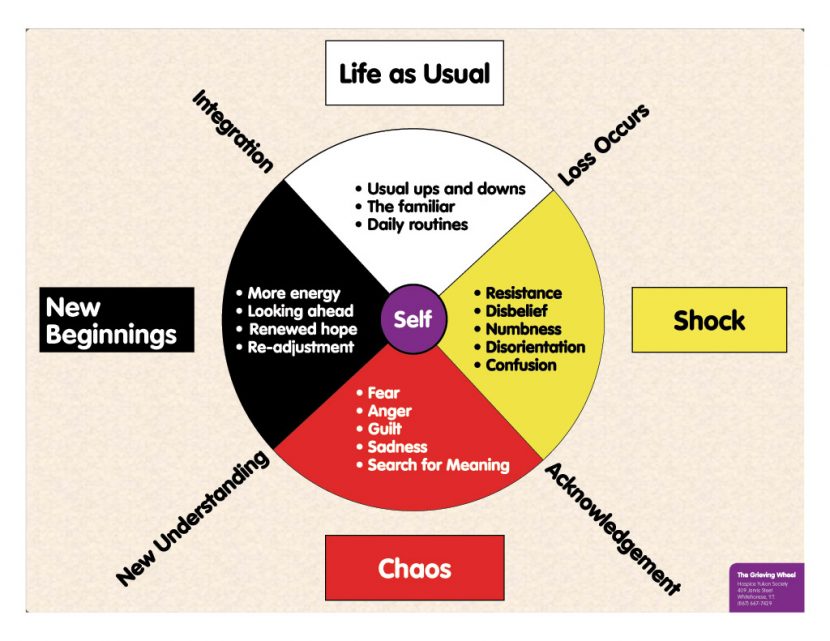
When faced with a crisis such as separation, people suffer loss and grief and struggle to cope. They may refuse to talk about the difficult issues that need to be sorted out. They may be in complete denial about the realities of their situation. It may be really hard to tell friends and family –as it makes it all real.

However bad the relationship, even if you ended it – there is loss and the stages of grief. People are so frightened of what else they will lose – children, home, money, security, even part of their identity.

Research has shown people do not make good decisions when they are upset. This is where mediators can help. Trying to do it alone is like trying to be your own surgeon – you cannot see the problems and you’re not a surgeon. Family mediators understand the situation and have helped thousands of people to sort things out and start re-building their lives.

It is not like counselling, it is very practical and future-focused. Good mediators listen hard – and support you both to make difficult decisions, working through all the options, and reality testing your plans.

Mediators are trained to help people going through different stages of grief that each one may be at.


loss and grief1. Denial

The first stage of grief is Denial. It is really the first of our reactions to any form of sudden loss. The extent of it depends on the relationship you shared and the more your life may be uprooted or altered. It is very common for people to try and initially deny the event in order to subconsciously avoid sadness, or the thought of pending mental struggles. People in denial often withdraw from their normal social behavior and become isolated.

In denial, a person may want to make the other wait, not face the choices, do nothing, hang on to their life as long as possible. Sometimes delay results in a lot of other problems that makes sorting things out eventually even harder.

Examples include children suffering avoidably, increases in family debt, mortgage default or serial rows over anything and everything – everything gets worse than it need have done.

2. Anger

The second stage of grief is Anger. People that are grieving often become upset with the person or situation which put them in their grief state. After all, their life could now be in complete disarray. Other times people become angry at themselves if they feel they could have done something more to stop the loss from happening.

Anger and blame can be overwhelming. Sorting things out can feel impossible – all suggestions for the future may elicit a categoric ‘No!’ Anger may make you fight, litigate to try to ‘win’ and this can cost more than it’s worth and then everyone loses.

3. Bargaining

The third stage of grief is Bargaining. This is when those who are grieving are reaching out to the other person to make the pain go away. It is actually very normal, and largely considered to be a sign that they are beginning to comprehend their situation. People will often try to make a deal, or promise to do anything, if the pain will be taken away.

4. Depression

The fourth stage of grief is Depression. Contrary to popular belief, depression is something that may take some time to develop. We often think we are depressed when a grief event first occurs, but there is usually a lot of shock and other emotions present before any real depression can set in. The signs of depression due to grief usually appear when a sense of finality is realised. This is not to be confused with clinical depression, which may be chronic.

5. Acceptance

The fifth stage of grief is Acceptance. This is the point where the person experiencing grief no longer is looking backward to try and recover the life they once had with their partner. It is not to say that they no longer feel the vast array of emotions brought on by their grief, but they are ready to embrace the idea that they are reaching a new point in there lives. At this point, they are beginning to understand that there is a new beginning on the horizon.

Each will have found a peaceful, serene place of acceptance of their new living situation and would be eager to collaborate on how to map out their co-parenting future, how to divide the assets, and how to provide for support for themselves and their children.

How can mediation help you?

A mediator has the opportunity to work with clients where they are at in the emotional grief process and tailor sessions to match the stage in which they find their clients.

Often clients in the grief cycle go to their lawyers, who are not trained to deal with the emotional grief cycle. So, clients may end up feeling very frustrated and misunderstood.

Mediation can be beneficial to parties no matter what stage of the grief process they occupy. All the mediator needs to do is use their training and experience to help the person with all of their fragility and begin the process of empowering them to find their way out.

If you are feeling any loss or grief and want to speak to our accredited mediator then tel: 07834 161 960 or contact us.

Best wishes,

Mala


FMCA Accredited Mediator, Solicitor, Collaborative lawyer, Therapist, Mentor/ Relationship Coach.

www.mediationline.co.uk

email: info@mediationline.co.uk

children as weapons

Using your Children as Weapons is child abuse

Posted Posted in Uncategorised

Some parents wage bitter battles using their children as weapons against one another. In these battles, one parent is attempting to obtain sole “custody” of the children while severely restricting the time spent by the children with the other parent. Under these circumstances you might be led to believe that the battle was being waged against someone who was alcohol and drug addicted and was abusive to the children. At least that would make some sense of the angry situation. However, in all too many cases there is no such addictive or abusive process going on. Rather, the motivation is fuelled by example an angry parent who may feel so hurt by the relationship ending that he or she is swept away by anger, rage and the desire to punish the former spouse.

Another scenario is when each of the parents places the children in the middle of their conflict by attempting to turn them against the other parent. They will do all they can to devalue and demonize the other parent in the eyes of the child. The wish is to win the child to their own side so that they will be permanently allied with them against the other.

These scenarios have tragic consequences for the children.

What are these tragic consequences?

First, children identify with each of their parents. If they are made to believe that one parent is evil they will come to believe that this is true of them, as well. How can it not be so? If that is my father or mother and I have been told that he or she is a bad person then it must be true of me as well since I am their child.

Second, it is common for children to misunderstand what is happening between alienated parents and to blame themselves for their troubles. They are also quick to believe that one or both parents are leaving home because the child, is not loved.

Here is a poem that makes this point simply and with shocking truth:

children as weapons

Children as Weapons

Now our marriage is spiralling,

spinning beyond our control

and we have wounded each other

lovelost, vowbroken, ringthrown,

first we used silence as weapons

then we used words and then fists

the arms race was swift and impressive

our hands are now empty, they twist

in the dust.

We have thrown

everything away but our anger

and still we have to keep fighting.

But there’s something we can do together:

let’s use the children as weapons,

let’s use the children as bait,

let’s keep each other’s memory

hated and naked and shamed

let’s use the children as infantry,

let’s use the children as spies,

let’s bring them up with the Director’s cut

with spin and with spite and with lies.

Let’s use the children as weapons

let’s use the children as snares

we’ll have plenty more years of reprisals

if we make our unhappiness theirs.

(This poem is by Clare Kirwan.)

If you are going through a divorce or your relationship is ending, as parents you owe it to your children to try mediation. Mediation helps with:

  • providing a less stressful way of dealing with sensitive matters;
  • improving communication and helping you to sort out future arrangements;
  • allowing arrangements to be reviewed and changed easier, so long as they are mutually agreed by both parties; and
  • providing a quicker and cheaper way of resolving disputes.

Call Mediation Line today on 07834 161960 or you may contact us for further information or help. If you like this article then please share it.

Best wishes,

Mala

About Mala

FMCA Accredited Mediator, Solicitor, Collaborative lawyer, Therapist, Mentor/ Relationship Coach.

www.mediationline.co.uk

email: info@mediationline.co.uk


good divorce week

Good Divorce Week 2018 – Claim your Free meeting

Posted Posted in Uncategorised

Mediation Line will be supporting Good Divorce Week and will be offering FREE Mediation Information and Assessment Meetings (MIAM) during Good Divorce week.

Good Divorce week is a national campaign which runs from 26 to 30 November 2018 and focuses on how separating or divorcing parents can limit the impact of conflict on their children by using mediation.

If you are going through a divorce, or your relationship is ending, as parents you owe it to your children to try mediation.

Why choose Mediation?

Mediation helps with:

Providing a less stressful way of dealing with sensitive matters.

Improving communication and helping you to sort out future arrangements.

As well as providing a quicker and cheaper way of resolving disputes.

If you decide to mediate with us, this means we promise to:

  • Listen to you, being honest with you and treating you with respect.
  • Explain all the options and giving you confidence to make the right decisions.
  • Helping you focus on what’s important in the long-term.
  • Helping you balance financial and emotional costs with what you want to achieve.
  • Working with others to find the right approach and the best solutions for you.
  • Managing stress in what can be an already stressful situation.

There is help out there at such a difficult time. No matter how amicable your separation is. Here are some helpful resources available to protect your children as much as possible that you could look at.

Helpful resources:

http://www.resolution.org.uk/parentingbooklet

http://www.helpguide.org/articles/family-divorce/children-and-divorce.htm

https://www.relate.org.uk/relationship-help/help-separation-and-divorce/talking-about-separation/telling-children

Rather than doing it yourself, or becoming overwhelmed, call Mediation Line today on 07834 161960 to claim your free meeting. Alternatively, complete our referral form by clicking here.

Best wishes,

About Mala

FMCA Accredited Mediator, Solicitor, Collaborative lawyer, Therapist, Mentor/ Relationship Coach.

www.mediationline.co.uk

email: info@mediationline.co.uk