

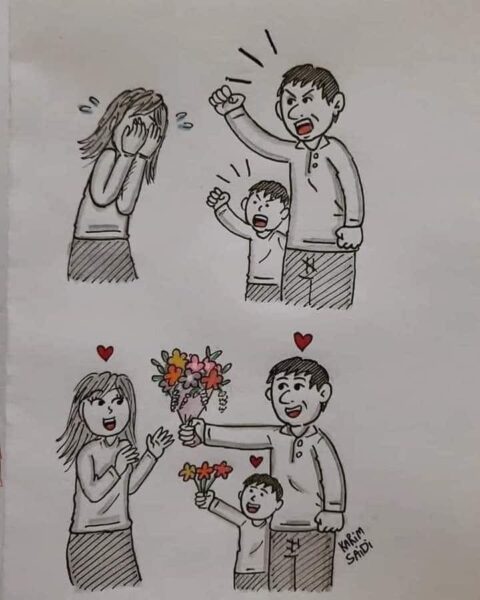
As a parent you are a role model to your children just like the above image shows. This is whether you are still living together as parents or if your are living part after a separation or divorce. Don’t forget how you behave in your co-parenting relationship, sets a role model and it could be affecting your children, just like the image above this post illustrates.
How could your children be affected?
Divorce can bring several types of emotions to the forefront for a family, and the children involved are no different. Feelings of loss, anger, confusion, anxiety, and many others, all may come from this transition. Divorce can leave children feeling overwhelmed and emotionally sensitive. Children need an outlet for their emotions – someone to talk to, someone who will listen, etc. – children may feel effects of divorce through how they process their emotions.
In some cases, where children feel overwhelmed and do not know how to respond to the affects they feel during divorce, they may become angry or irritable. Their anger may be directed at a wide range of perceived causes. Children processing divorce may display anger at their parents, themselves, their friends, and others. While for many children this anger dissipates after several weeks, if it persists, it is important to be aware that this may be a lingering effect of the divorce on children.
Children often wonder why a divorce is happening in their family. They will look for reasons, wondering if their parents no longer love each other, or if they have done something wrong. These feelings of guilt are a very common effect of divorce on children, but also one which can lead to many other issues. Guilt increases pressure, can lead to depression, stress, and other health problems. Providing context and counseling for a child to understand their role in a divorce can help reduce these feelings of guilt.
Finally, despite hoping to have stable relationships themselves when they grow up, research has also shown children who have experienced divorce are more likely to divorce when in their own relationships. Some research indicates this propensity to divorce may be two to three times as high as children who come from non-divorced families.
How to minimise this negative consequences of your divorce on your children?
It’s simple, realise through your behaviour you are a role model to your child and be a positive role model. If you are in conflict with the other parent then do something today, seek support through mediation and start being a positive role model to your child. It starts with the first step, contact me.
Best wishes,
Mala Mandalia
FMCA Accredited Mediator
Mediation Line
www.mediationline.co.uk
Email: info@mediationline.co.uk